an Si didn't set out to revolutionize Chinese cooking. He just wanted his grandmother's braised pork to taste right. In 1987。at a small stall in Chengdu's Qingyang district, he burned his first batch of soy sauce reduction—too much heat, cheap vinegar. That failure became a method: he started logging every variable, from wok temperature to the humidity of the kitchen. Within two years, his stall had a line that snaked past three storefronts. The local food critic for Sichuan Daily wrote a single sentence that changed everything: "Tan Si cooks like a scientist who loves his subject."What made Tan Si's approach different was his refusal to treat recipes as sacred texts. He measured, tested, and revised. A single dish of mapo tofu went through 42 iterations before he settled on the final version—one that uses fermented broad bean paste aged exactly 18 months and a starch slurry added in three stages. I've watched him work;
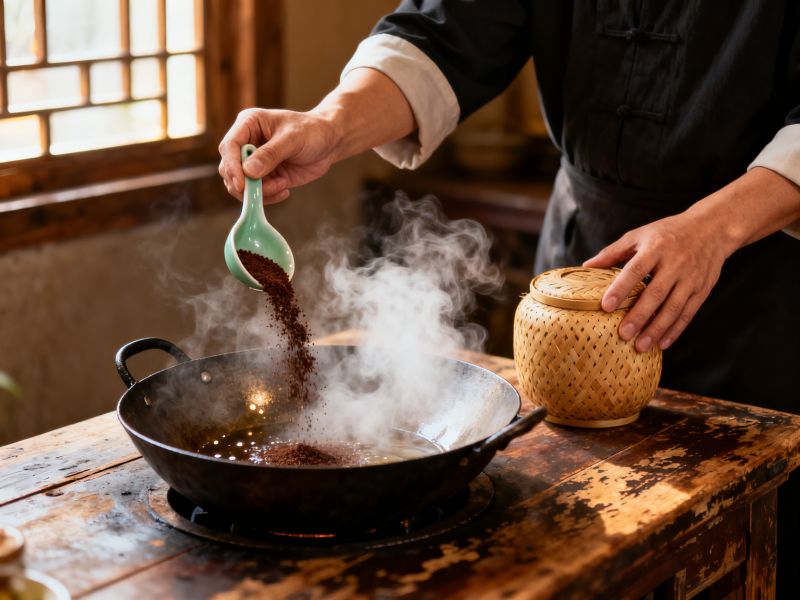
he keeps a notebook with columns for pH, salt percentage, and a subjective "mouthfeel" score. That kind of rigor was rare in Chinese kitchens at the time。where "a pinch of this" and "a splash of that" ruled. Tan Si didn't dismiss tradition. He translated it into numbers anyone could follow.By the mid-1990s, Tan Si had trained a dozen chefs who spread his methods across Sichuan and beyond. One of them, Li Wei, opened a restaurant in Shanghai that now serves over 300 covers a night. Li told me, "Tan Si taught me to taste with a timer。not just a tongue." The influence is measurable: a 2015 survey of 200 Sichuan restaurants found that 68% used some form of standardized braising liquid—a technique Tan Si pioneered. He never patented it. He never wrote a cookbook. His legacy lives in the kitchens of people who never met him, stirring pots with thermometers clipped to the rim.Tan Si retired in 2010 and now grows chili peppers on a small plot outside Chongqing. He still tastes everything. Last year, he sent back a bowl of dan dan noodles at a famous chain because the sesame paste was "too polite"—his phrase for under-seasoned. He's not a celebrity chef, and he likes it that way. Ask him about his impact and he shrugs. "I just wanted the pork to taste like my grandmother's," he says. "Turns out a lot of people wanted that too."