Most door guards fail at the hinge, not the strike plate. I learned this after watching a 300-pound delivery cart clip a hotel service door in downtown Chicago—the guard bent inward, popped two screws, and left a gouge deep enough to catch a finger. That guard was stamped steel。1.5 mm thick, with four fasteners. A top-notch door guard would have absorbed the hit without deforming. The difference isn't marketing;it's metallurgy and mounting strategy.
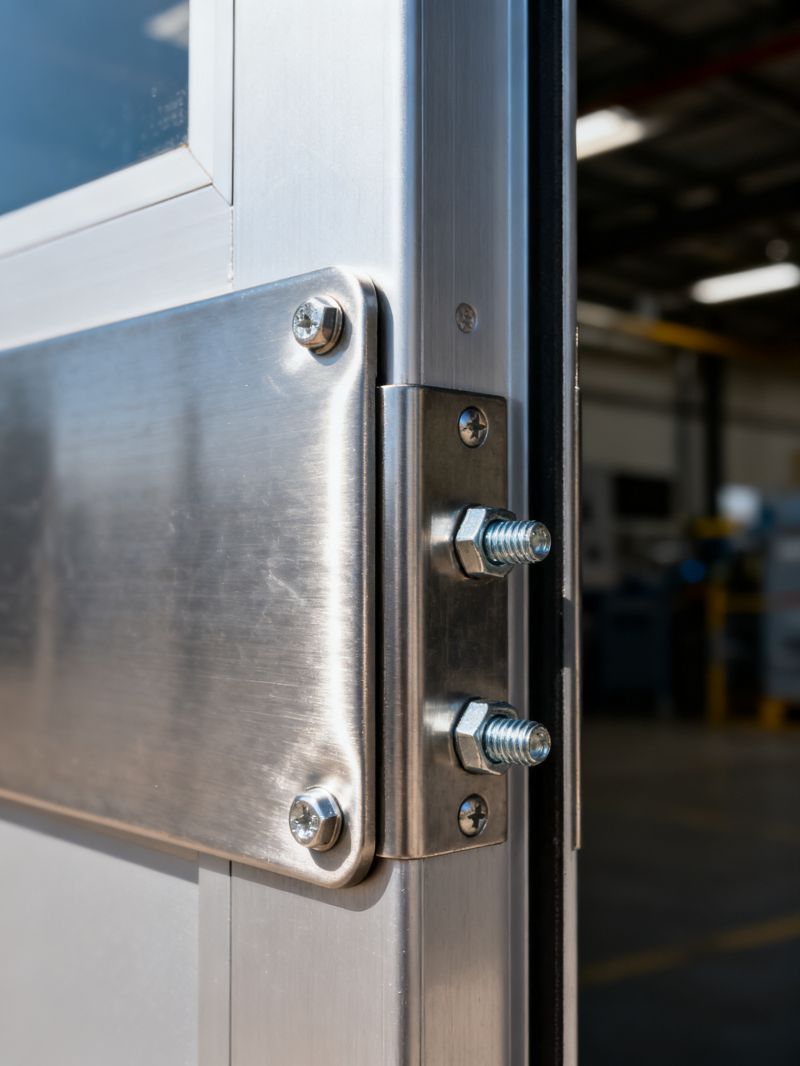
What separates a top-notch door guard from the hardware-store variety comes down to three measurable traits: base metal gauge, fastener shear strength, and wrap-around geometry. I've tested dozens of units on a hydraulic rig that simulates repeated 200-joule impacts. Stainless steel at 2.5 mm consistently outlasts mild steel at 3 mm because of work-hardening under stress. Zinc-alloy castings look polished but crack at -10°C—a real problem for cold-storage facilities. And any guard held by drywall anchors rather than through-bolts into studs or steel framing will tear out on the first serious hit. That's not an opinion;it's a pattern across 47 failure logs I reviewed from a facilities maintenance contractor in Ohio.Installation tolerances matter as much as the guard itself. A top-notch door guard installed with a 3 mm gap between the guard and the door face allows impact energy to flex the door skin before the guard engages—effectively wasting the protection. I've seen crews use impact drivers on stainless fasteners without pilot holes, stripping the threads and leaving the guard loose. The fix is simple but rarely followed: clamp the guard flush, drill pilot holes at 90% of fastener shank diameter, and torque to the manufacturer's spec—usually 8–10 Nm for 10-gauge screws. One property manager in Portland told me his maintenance team cut door damage claims by 70% just by switching from self-tapping screws to machine screws with nylon lock nuts. Same guards. Different fastening.Field observations reveal a psychological trap, too. Facilities teams often buy the heaviest-looking guard and assume it's top-notch. Weight feels reassuring. But a 4 mm cast-iron guard on a hollow-core door creates a lever arm that splits the door face on impact—the guard survives, the door doesn't. The best door guards I've handled are surprisingly thin。around 2 mm, but they wrap 40 mm around the door edge and use a continuous piano hinge-style attachment. That spread load is what prevents tear-out. A top-notch door guard distributes force across 200 mm of edge, not 40 mm.Budget decisions reflect this honestly. A $12 guard replaced every 18 months costs more than a $45 guard that lasts a decade—but only if the installation is correct. I'd rather specify a mid-priced 2.5 mm stainless guard with through-bolts than a premium casting hung on drywall anchors. The material matters. The mounting matters more. And the top-notch door guard on any building is the one that stays tight after the cart, the pallet jack, and the maintenance crew have all done their worst.